Rgb channel letters use red, green, and blue LEDs plus a controller to create multiple colors, while standard LED channel letters usually display one fixed color, such as white, red, or blue. The main difference is not only color flexibility but also system complexity, installation planning, and long-term operating cost. For buyers comparing rgb channel letters vs standard led channel letters, the right choice depends on the brand goal, control method, and whether dynamic lighting is actually needed.
The difference between RGB and standard LED channel letters comes down to three practical factors: color output, control hardware, and maintenance scope. RGB systems can generate many color combinations by mixing the three base LEDs, but they require a controller, programming, and more careful setup. Standard LED channel letters usually use a single-diode color configuration, which makes them simpler for sign illumination for retail, storefront branding, and other applications where the message stays consistent.
For businesses comparing rgb channel letters explained against a conventional setup, the buying decision should not start with appearance alone. It should start with operating needs, frequency of color change, and whether the sign must coordinate with promotions, events, or seasonal campaigns. If the sign only needs a fixed brand color and stable visibility, standard LED channel letters usually reduce complexity and simplify future service planning.
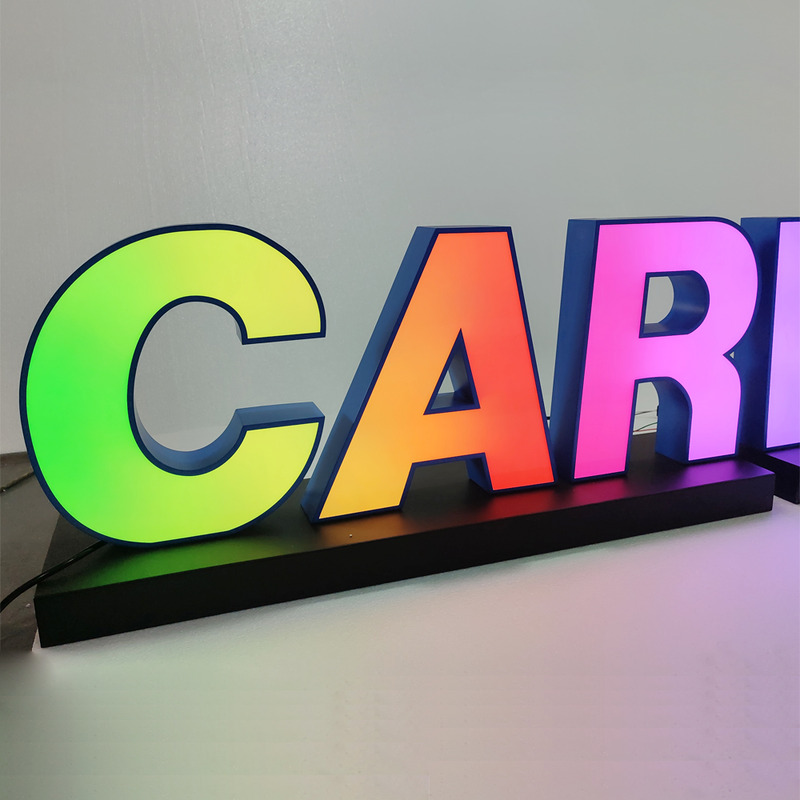
RGB channel letters are illuminated letter signs that combine red, green, and blue light sources to create a wide range of colors. In practice, the light is mixed through a control system, allowing the sign to shift between preset colors or display changing effects. This is why rgb channel letters are often used for brands that want visual variation rather than a single static appearance.
The typical setup includes letter housings, LED modules, wiring, a power supply, and an RGB controller. Some systems use remote control, while others use app-based or programmed scheduling controls, which changes how the sign is operated day to day. For buyers asking how does RGB channel letters work, the short answer is that the controller tells each color channel how much to output, and the combined result determines the visible color.
RGB channel letters work by blending different intensity levels from red, green, and blue LEDs. By adjusting those three channels, the controller can create a broad range of visible colors, including white-like tones and branded color sequences. The practical result is more visual flexibility, but also more setup steps before the sign is ready for use.
This matters because controller quality affects scheduling, brightness changes, and color consistency across multiple letters. A basic installation might only need on/off operation, while a more advanced setup may require timed scenes, brightness adjustment, or synchronized animations. That is the core operational difference behind RGB channel letters vs standard LED channel letters: one system is built for fixed illumination, and the other is built for programmable output.
Standard LED channel letters use LED modules that produce one primary color, most often white. They are designed for consistent visibility, straightforward wiring, and simpler maintenance because there is no color-mixing controller involved. For many storefronts, especially those focused on readability and steady branding, this is enough.
These letters are commonly used in front-lit channel letters for shopping centers, offices, restaurants, and service businesses. The system is easier to specify because the buyer chooses a color temperature or a fixed color once, then maintains that output over time. For operators who value predictable service planning and lower electrical complexity, standard LED channel letters are often the more practical option.
The biggest contrast between the two options is flexibility versus simplicity. RGB channel letters can change color and effect, but that flexibility comes with additional hardware, programming, and installation checks. Standard LED channel letters do not offer the same color range, but they are usually easier to deploy and easier to maintain.
That difference also affects purchase price and total cost of ownership. An RGB system typically includes a controller, extra wiring considerations, and more configuration time, which can increase upfront cost and service complexity. Standard LED systems usually avoid those added components, so buyers comparing RGB channel letters pricing often see the standard version as the lower-complexity choice.
From a budgeting perspective, RGB channel letters often cost more because the bill of materials includes the LED system plus the controller layer. The complexity is not limited to hardware; it also affects testing, installation coordination, and future service calls. A sign with fixed lighting is easier to troubleshoot because the failure points are fewer.
For procurement teams, the real question is whether the added control functions will be used often enough to justify the expense. If the sign will stay on one color 95% of the time, RGB may add cost without adding much business value. If the brand changes lighting for weekends, launches, or seasonal events, the extra control layer may be easier to justify.
| Factor | RGB Channel Letters | Standard LED Channel Letters |
|---|---|---|
| Color output | Multiple colors through RGB mixing | One fixed color |
| Controller requirement | Yes | Usually no dedicated color controller |
| Installation complexity | Higher | Lower |
| Best use case | Events, promotions, dynamic branding | Storefront identity, steady brand visibility |
| Typical cost structure | Higher upfront and service complexity | Lower upfront and simpler maintenance |
RGB channel letters are most useful for businesses that benefit from changing visuals. That includes entertainment venues, event-driven retail, gaming spaces, hospitality concepts, and brands that run seasonal campaigns. If the sign is expected to support different moods or repeated promotions, RGB can add operational value beyond simple illumination.
Standard LED channel letters are often the better fit for banks, clinics, office buildings, professional services, and retail stores with fixed brand standards. These businesses usually need clear nighttime visibility more than color variation. If the sign only needs to reinforce the logo and remain legible from a distance, a standard LED setup is usually enough.
RGB can be visually appealing, but that does not mean it is the right purchase for every site. If the brand identity is already defined by one logo color, a changing-color sign may create inconsistency rather than clarity. It can also create approval issues in multi-location rollouts when managers want all locations to match the same standard.
This is where a brand-use-case decision framework matters more than a lighting-type decision. A fixed-color storefront sign can be more effective when the business needs quick recognition, low maintenance, and predictable appearance across multiple sites. In that context, RGB becomes an extra layer of capability, not an automatic upgrade.
A common buyer question is: Do RGB channel letters work outdoors? Yes, they can work outdoors when the sign is built for exterior use and properly sealed for weather exposure. Outdoor performance depends on enclosure design, power supply protection, wiring quality, and installer practices, not on RGB alone.
The operational implication is that outdoor RGB signs need more planning around controller placement, moisture management, and service access. For example, if the controller must stay in a protected area, the installation path becomes more complex than with standard fixed-color letters. Buyers should review enclosure ratings, cable routing, and maintenance access before choosing a system.
A practical channel letters lighting guide should start with three questions: what must the sign communicate, how often will the lighting change, and who will maintain it. Those questions help separate visual preference from operational need. They also reduce the risk of buying a sign that looks useful in a mockup but adds avoidable service cost later.
Here is a simple comparison checklist:
Brand objective: fixed identity or changing visual effects.
Control method: simple on/off, dimming, or programmable scenes.
Maintenance burden: fewer components or more service points.
Budget range: upfront investment versus long-term operating cost.
Deployment scale: one location or multiple locations with consistent standards.
RGB channel letters pricing is influenced by letter size, face material, LED module density, controller type, wiring length, installation height, and whether the sign is indoor or outdoor. A sign that requires programmable scenes or synchronized color changes will usually need more hardware and configuration time. Standard LED channel letters generally have fewer line items because the electrical layout is simpler.
Buyers should also consider the cost of future changes. If a business expects to update colors monthly, RGB may reduce the need for physical replacement or rebranding later. If the brand will stay fixed for several years, standard LED channel letters often deliver a lower total cost of ownership because they avoid controller-related maintenance.
Choosing how to choose RGB channel letters starts with defining the business goal, not the product feature. If the sign needs to support events, promotions, or a rotating color schedule, RGB is a logical fit. If the main goal is permanent brand visibility, standard LED letters often provide the same readability with less complexity.
A simple decision model works well:
Choose RGB when the sign is part of a changing visual strategy.
Choose standard LED when the sign is part of a fixed brand identity.
Choose RGB only when the color control will be used often enough to justify the controller and setup.
Choose standard LED when maintenance simplicity and lower system complexity matter more than color flexibility.
This is also where a manufacturer partner matters. Grandview, for example, is often evaluated by buyers who want custom LED signage options that fit both branding and installation requirements. When reviewing suppliers, the important questions are whether they can document outdoor suitability, controller options, and production consistency for repeat orders.
In most projects, yes, RGB channel letters are more expensive than standard channel letters because of the extra control hardware and configuration requirements. The pricing gap depends on size, mounting method, and whether the system includes remote control, app control, or scene programming. The more control features you add, the more likely the system cost will increase.
That said, the higher price does not always mean lower value. If the sign is tied to campaigns, grand openings, or image-driven retail, RGB can reduce the need for future redesigns. If the business only needs steady nighttime visibility, standard LED channel letters usually offer better cost efficiency.
The better choice depends on your signage goal. RGB is better when color flexibility is part of the marketing plan, while standard LED is better when consistency, readability, and service simplicity matter more. The question is not which system is newer; it is which system fits the operating model.
For a single-location restaurant that runs themed events, RGB may be practical. For a medical office or law firm, standard LED channel letters usually make more sense because they prioritize stable brand presentation. For a retail chain, the decision may come down to whether all locations need one uniform light appearance or localized promotional flexibility.
A responsible manufacturer review should cover production control, weather protection, controller documentation, and installation support. Buyers should ask whether the supplier can specify LED module type, power supply rating, controller compatibility, and enclosure details. These are not cosmetic questions; they affect field reliability and service frequency.
You should also ask for tolerance details where available, such as face thickness, letter depth, and wiring protection methods. For multi-site projects, consistency matters because small differences can create visible variation between locations. If a supplier cannot clearly explain how the system is tested and assembled, the buyer may face higher delivery risk and more post-installation adjustments.




Comments
0